
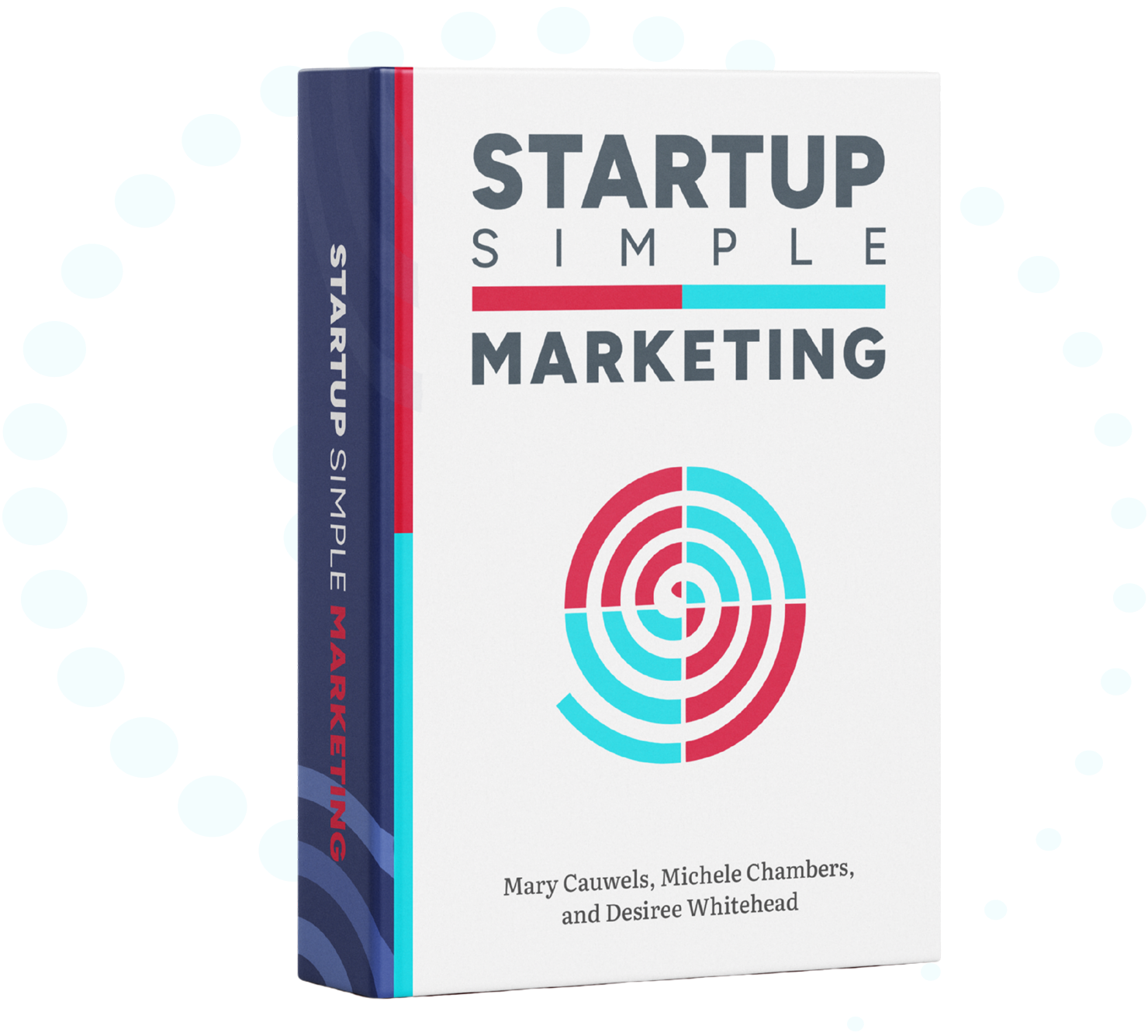



Who This Book Is For
Growth-Oriented Entrepreneurs
Founders looking to build a structured marketing strategy that supports long-term growth.
Early-Career Marketing Professionals
Marketers who want to understand real go-to-market strategy beyond tactics.
University Students
Students studying marketing, entrepreneurship, or business strategy.
Founders Struggling with Marketing Consistency
Startup leaders trying to move from scattered campaigns to a focused marketing system.
Teams Needing a Scalable Marketing Foundation
Marketing teams looking to align messaging, strategy, and execution.
Venture Capitalists and Growth-Focused Investors
Investors interested in understanding the marketing frameworks that drive sustainable company growth.
What You’ll Master

Eliminate the Chaos
Identify the marketing activities that directly support the buyer journey.

Build the Right Foundation
Apply the Minimum Viable Marketing framework to clarify value proposition and positioning.

Fast-Track Your Fit
Use marketing to validate messaging and uncover product-market resonance.

Shift Guessing to Testing
Create agile experimentation loops that generate insight.

Create the Flywheel
Build a repeatable marketing engine that supports scalable growth.
Why this book matters right now
In a world full of marketing distractions, growth companies need more than motion. They need clarity. They need discipline. And they need a framework that connects business strategy to sustainable growth.
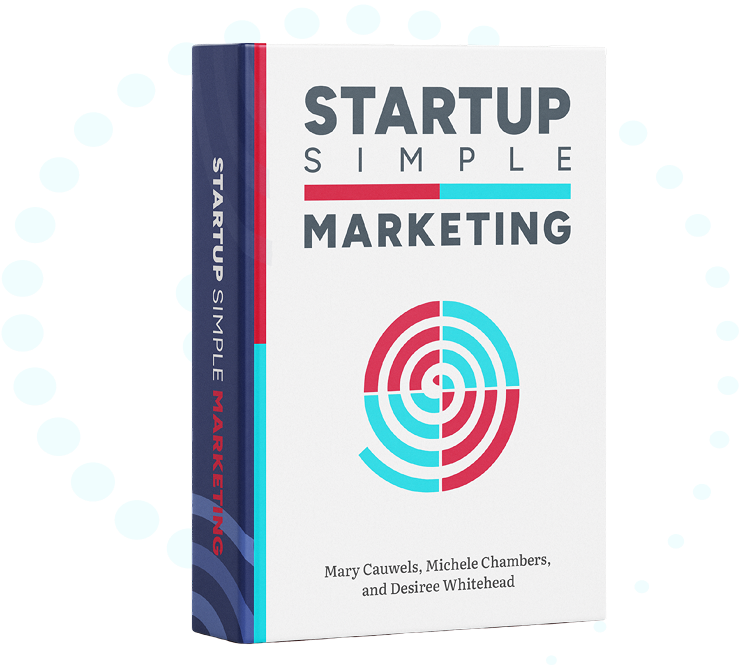
Startup Simple Marketing helps readers move from confusion to confidence and from activity to momentum.
About the Authors

Michele Chambers


Mary Cauwels

Desiree Whitehead
Frequently Ask Questions
Everything you need to know about Startup Simple Marketing, the book, the framework, and how it can help you grow.
Join the WaitlistWhat is Minimum Viable Marketing (MVM), and how is it different from a Minimum Viable Product (MVP)?
Minimum Viable Marketing (MVM) applies the Minimum Viable Product (MVP) approach to marketing. An MVP tests whether your product is usable and valuable. MVM tests whether your messaging and channels create real demand, using a small set of marketing experiments to collect data and refine what works. Run both in parallel to reach product-market fit sooner.
Who is Startup Simple Marketing for: founders or marketers?
Both. It’s for founders and CEOs of early-stage B2B companies moving beyond founder-led sales, and for the marketing teams building their engine. The focus is the Startup Marketing Engine stage, typically $0–10M in annual recurring revenue (ARR), when getting the fundamentals right matters most.
Why do startups waste so much of their marketing budget?
Most fall into activity theater: lots of marketing activity with no link to strategy or measurable results. They try every tactic at once and change messaging without data. Minimum Viable Marketing (MVM) fixes this by testing a few high-impact activities, measuring results, and doubling down on what works.
We need more leads. Why should we build a marketing foundation first?
A lead problem is usually a foundation problem. Your marketing foundation defines your ideal customer profile (ICP), value proposition, and brand promise, the commitment you make to customers. Without it, lead generation targets the wrong audiences. With it, every campaign works harder.
What is product-market fit, and how does marketing help a startup get there?
Product-market fit (PMF) is reached when target customers are buying, using, and telling others about your product in numbers large enough to sustain growth. Marketing helps by bringing market requirements to the product team and achieving message-market fit, so buyers understand why your product matters to them.
What will I get from reading Startup Simple Marketing?
A roadmap from marketing foundation to go-to-market (GTM) execution, real B2B case studies, and a debrief process for learning what works.
How much should a startup spend on marketing?
It depends on your growth goals, sales motion, and funding. B2B companies typically spend 1–22% of revenue on marketing. Early-stage companies often plan against target revenue and invest 20–40% of it. Most startups put more into brand awareness first, then shift toward demand generation as the brand gains momentum.
When should a startup hire its first marketer?
As soon as there's a real product and a real customer problem. Start with experienced, hands-on "utility players": a marketing leader who knows messaging and demand generation, plus product marketing, which connects product, marketing, and sales. A fractional CMO or agency can fill gaps until you're ready to hire full time.
Can AI replace a startup's marketing team?
No, but it can make a small team far more productive. AI helps with research, content drafts, and data analysis. You still need experienced people to set strategy, coordinate with sales and product, and judge whether AI output is accurate.
Why does sales say marketing's leads are bad?
It's usually a foundation issue, not a lead issue. When messaging, targeting, or qualification is off, marketing qualified leads (MQLs) don't become sales qualified leads (SQLs), the leads sales agrees are ready to buy. Agreeing with sales on your ideal customer profile (ICP) and lead definitions fixes it.

Be the first to hear when the book launches
Join the waitlist to receive updates on the release of Startup Simple Marketing, plus early news around launch details and preview content.


